Divorce in Korea as a Foreigner 2026: The Legal Process, Costs & F-6 Visa Survival Guide
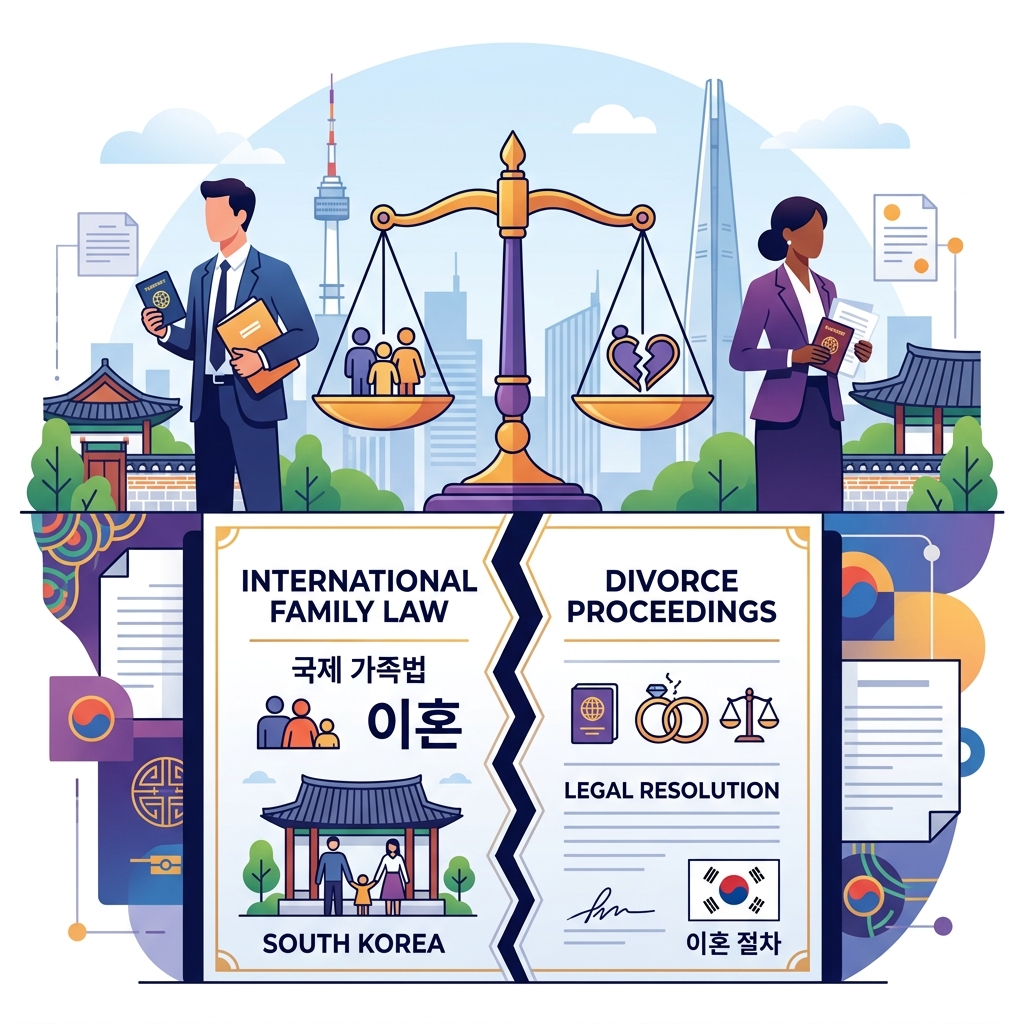
Approaching a divorce is one of the most stressful experiences anyone can face, but for a foreign national in South Korea, the stress is multiplied by a single, terrifying question: "If I divorce, do I lose my right to stay here?" Many expats remain in unhappy or even abusive marriages because they fear immediate deportation or losing access to their children. In 2026, the legal landscape has shifted to provide more protection for the "vulnerable" spouse, but navigating the difference between Divorce by Agreement and Judicial Divorce remains critical for your survival in Korea.
📌 This guide provides an overview of Korean family law and immigration policy as of early 2026. Divorce law is highly specific to your facts. Always consult a licensed Korean attorney specializing in international family law before filing any documents.
Many expats experience both heartbreak and resilience navigating the family court system. The good news is that South Korea’s 2026 residency rules (the F-6-2 and F-6-3 extensions) are designed to prevent the "hostage marriage" scenario. Here is exactly what happens to your visa, your assets, and your children when a marriage ends.
The F-6 Visa survival strategy: how to stay in Korea
The biggest myth in the expat community is that divorce equals deportation. This is false. Under current 2026 Ministry of Justice guidelines, there are two primary "pivot" visas that allow a divorced foreigner to remain in South Korea indefinitely or until their children reach adulthood.
1. The F-6-2 Visa (The Custodial Parent)
If you have an underage child born of the marriage and you are granted **custody** or **substantial visitation rights**, you can transition to an F-6-2 visa. This visa is generally easy to renew as long as you can prove you are actively participating in the raising of the child. Note: You do NOT have to be the primary custodian; even "significant access" can qualify you under the 2026 standards.
2. The F-6-3 Visa (The "No-Fault" Spouse)
If the marriage ended due to a cause attributable to the Korean spouse (e.g., domestic violence, infidelity, gambling, or abandonment), you can apply for an F-6-3 extension. However, there is a catch: You must provide "clear and objective evidence" that your spouse was at fault. This is why a simple "Divorce by Agreement" can be dangerous—those records often don't specify who was at fault, making it nearly impossible to secure an F-6-3 extension later.
🤝 Divorce by Agreement: High risk of visa cancellation unless you have kids.
🏛️ Judicial Divorce (Fault Found): High protection for residency via F-6-3.
🏠 F-5/F-2 Holders: Your status is generally safe regardless of the divorce type (but check criminal record requirements).
Property division: the "Contribution" system
South Korea does not have a 50/50 community property law. Instead, the court looks at the "contribution" of each spouse to the acquisition and maintenance of assets. In 2026, the courts have become significantly more progressive regarding the value of household labor.
Even if you were a stay-at-home parent and never earned a single Won in Korea, you are typically entitled to **30% to 50%** of the marital assets for a marriage lasting more than 10 years. Marital assets include real estate, bank savings, and even the "Toijikgeum" (severance pay) or future pension of your Korean spouse. Pre-marital assets (property owned before the wedding) are generally excluded unless the marriage lasted long enough that you "contributed" to its maintenance (e.g., by paying taxes or mortgage interest).
Child custody: nationality vs. stability
"The Korean parent always wins custody." This is a widespread lie. Since the 2021 Seoul Family Court reforms, which remain the foundation of the 2026 system, the primary factor is the "Best Interests of the Child."
The court assigns a social worker (investigator) to visit both homes. They look for:
- Who has been the primary caregiver for the last 12 months?
- Who has a stabler emotional bond with the child?
- Will the child's environment (school, friends) be disrupted?
Working more hours does NOT make the Korean spouse a better candidate; in fact, being a "working parent" with a strong emotional bond often beats a "wealthy" parent who was never home. If you are a foreign parent, as long as you can prove you have a stable place to live and a plan for the child's education in Korea, you stand an equal chance of winning sole custody.
| Factor | Impact on Custody (2026) |
|---|---|
| Nationality | Neutral (Legally irrelevant) |
| Financial Status | Secondary (Support payments can fix this) |
| Emotional Bond | Primary (The most important factor) |
| Child's Opinion | Strong (If child is over 13) |
Child support and Alimony (*Wijaryo*)
Child support is mandatory and non-negotiable. Even if you leave Korea, you are legally required to pay. Conversely, if your Korean spouse refuses to pay, you can use the **Child Support Relief System** to have the government garnish their wages or even suspend their driver's license.
Alimony in Korea (called Wijaryo) is different from the West. It is not a lifetime maintenance payment. It is a one-time "consolation" payment for your mental distress. The maximum is usually around ₩30,000,000 to ₩50,000,000, and it is only awarded if you can prove significant fault (like an affair or violence). Do not expect to live off alimony in Korea; it is more like "damages" in a lawsuit.
"The 2026 Korean Family Court is increasingly moving toward a 'No-Fault' division of assets but remains strictly 'Fault-Based' regarding alimony. Foreigners should focus on asset contribution rather than chasing a small wijaryo payout." — International Bar Association, Korea Division.
Step-by-step: the "Exit Plan" for foreigners
If you are considering filing for divorce, do not alert your spouse until you have secured these three things. Domestic law allows for "temporary restraining orders" and "freezing of assets," but you need to act before common bank accounts are emptied.
Final Thoughts
Divorce is an end, but it is also a beginning. In South Korea, being a foreign national does not strip you of your parental rights or your right to a fair financial settlement. The system in 2026 is designed to be fair, provided you have the evidence to back up your claims. If you are in a situation that is no longer safe or healthy, reach out to the **Korea Global Center** or the **Seoul International Center** for free initial legal consultations. You are not alone, and your visa doesn't have to be your cage.
※ Statutory Disclaimer: This article is for informational purposes only and does not constitute legal advice. Please consult with a qualified attorney registered with the Korean Bar Association.
Independent operator of KR INSIDER · in Korea since 2018 · naturalized citizen (2022). Personally navigated ARC, visa renewals, Jeonse contracts, tax filings, and NHIS/NPS enrollment. This page was researched from official sources and verified against 2026 statutory rates. Rules change frequently — always confirm with the relevant office before deciding.