Nannies in Korea 2026: The Truth About the Foreign Domestic Helper Program
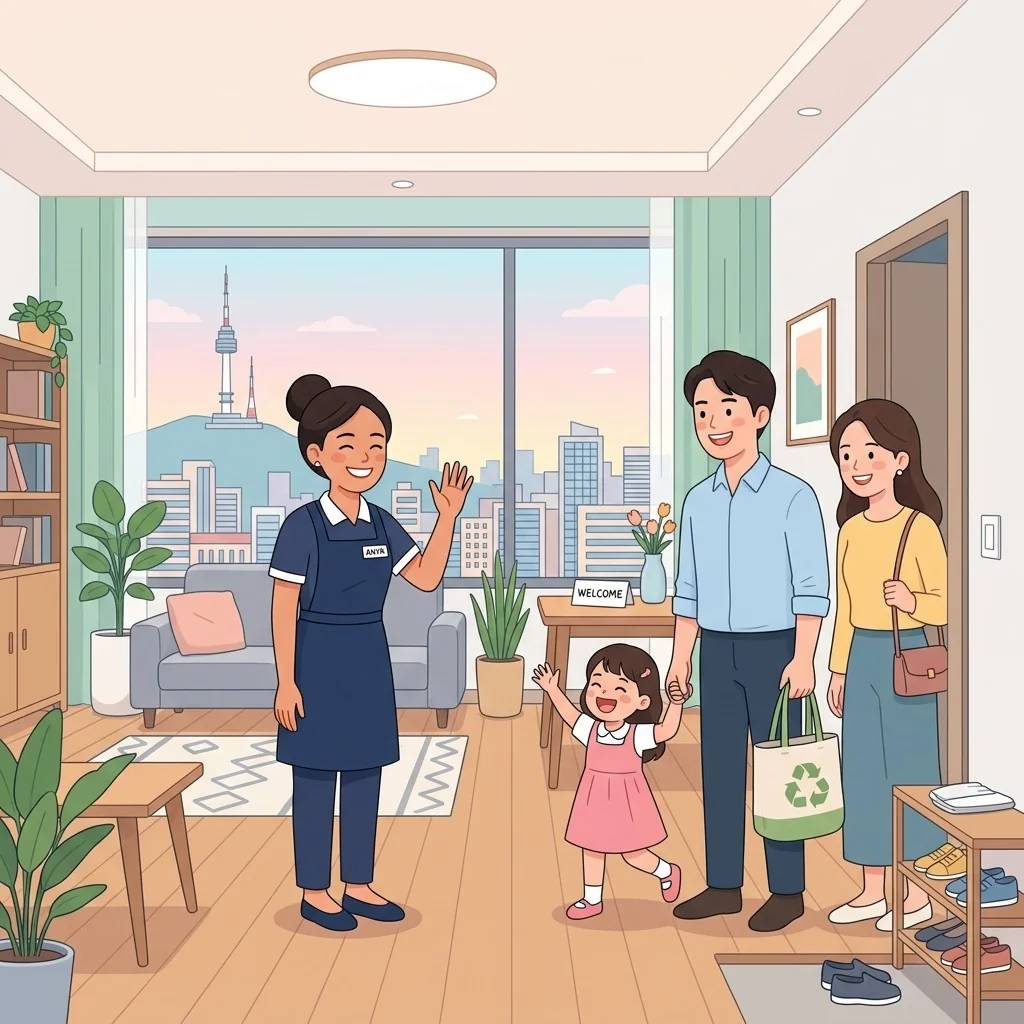
For many working expat families in Seoul, the news of the 2024 pilot program for Filipino domestic helpers was a beacon of hope. The promise of affordable, legal childcare support was supposed to alleviate the crushing pressure of the "career-family" juggle. However, as we move through 2026, the landscape has shifted dramatically. The much-anticipated expansion has been halted, and the government has pivoted its strategy, leaving many families wondering: "Where does this leave us?"
📌 This article provides general legal and regulatory information regarding domestic labor in Korea. For specific visa sponsorship or employment contract advice, always consult a qualified labor attorney or the Ministry of Employment and Labor (MOEL).
- Pilot Terminated: The government has officially decided not to transition the 2024-25 pilot into a permanent nation-wide program.
- Quota Cuts: The E-9 visa quota for 2026 has been slashed by 38% compared to last year.
- Legal Reality: Hiring a foreign "domestic manager" now relies almost entirely on private F-series visa holders.
The 2026 Verdict: Why the Pilot Program Ended
The Foreign Domestic Helper Pilot Program has officially concluded without expansion because of ongoing disputes over minimum wage parity and concerns regarding worker retention and job scope.
Having spoken to several expat families who were eagerly waiting for the pilot expansion, I've heard the same frustration: "The math just didn't work for the government." The core of the issue was Choejjeo-imgeum (최저임금 - Minimum wage). Unlike Singapore or Hong Kong, Korea's Supreme Court and labor laws mandate that the national minimum wage applies to all foreign workers. This pushed the monthly cost to over ₩2.4 million, which was higher than many middle-income families could afford.
Furthermore, the Gasa-gwallisa (가사관리사 - Housekeeper/Domestic Manager) role faced significant attrition. Many workers found the transition to Korean society difficult, and the "platform-based" living arrangements led to higher-than-expected overhead. As a result, the Ministry of Employment and Labor decided to focus the E-9 Visa (비전문취업 - Non-professional employment visa) quota on manufacturing and construction instead, where the labor shortage is even more acute.
The Legal Reality: How to Hire a Nanny Today
With the government sponsorship program off the table for new applicants, the burden of "legal hiring" has returned to the private sector. It is a common misconception that you can simply "bring over" a relative or a friend on a tourist visa to help with the kids. This is highly illegal and can lead to heavy fines and deportation for both parties.
| Helper Category | Legal Status | Key Restriction |
|---|---|---|
| F-2, F-4, F-5, F-6 | Legal (Full Rights) | Market-rate salaries |
| E-9 (Pilot remnant) | Legal (via Agency) | No new recruitment in 2026 |
| D-2, D-10 | Conditional | Max 20-30 hrs/week |
Currently, the most practical route for expats is hiring foreign residents who already hold F-series visas. These individuals are legally allowed to work in the domestic services sector without additional sponsorship. However, because they are already in high demand, their market rates often exceed the legal minimum wage, sometimes reaching ₩3.0 - ₩3.5 million for full-time, live-in positions.
Navigating Contracts and Compliance
Even if you hire through a private introduction, you are functionally an "employer" under Korean law if you hire directly. This brings responsibilities that most expats are unprepared for, such as the 4 Major Insurances and severance pay.
"Under the 2022 Act on the Improvement of Employment of Domestic Workers, only workers employed through a government-certified agency are fully covered by standard Labor Standards Act protections regarding paid leave and holidays." — Ministry of Employment and Labor (MOEL), 2026 Update.
Frequently Asked Questions
Can I sponsor a relative from abroad to work as my nanny?
No, there is currently no specific visa category for sponsoring family members to work as domestic helpers in Korea. Attempting to use a C-3 (Tourist) or F-1 (Visit & Stay) visa for work is a serious violation of the Immigration Act.
Why is it so much more expensive than Singapore or HK?
Korea does not have a "Foreign Domestic Worker" exemption from its national minimum wage laws. While several politicians pushed for a ₩1.0 million monthly salary cap during the 2024 debates, it was rejected due to international labor treaties (ILO) and internal human rights concerns.
Are there still Filipino helpers available through agencies?
Only those who arrived during the initial 2024 pilot and extended their E-9 status are still active. There is no new pool of government-vetted helpers being recruited as of Q2 2026.
※ All information is based on 2026 statutory rates and official publications. Individual circumstances may vary. This is not professional legal advice. For official inquiries, contact the Ministry of Employment & Labor →
Independent operator of KR INSIDER · in Korea since 2018 · naturalized citizen (2022). Personally navigated ARC, visa renewals, Jeonse contracts, tax filings, and NHIS/NPS enrollment. This page was researched from official sources and verified against 2026 statutory rates. Rules change frequently — always confirm with the relevant office before deciding.